

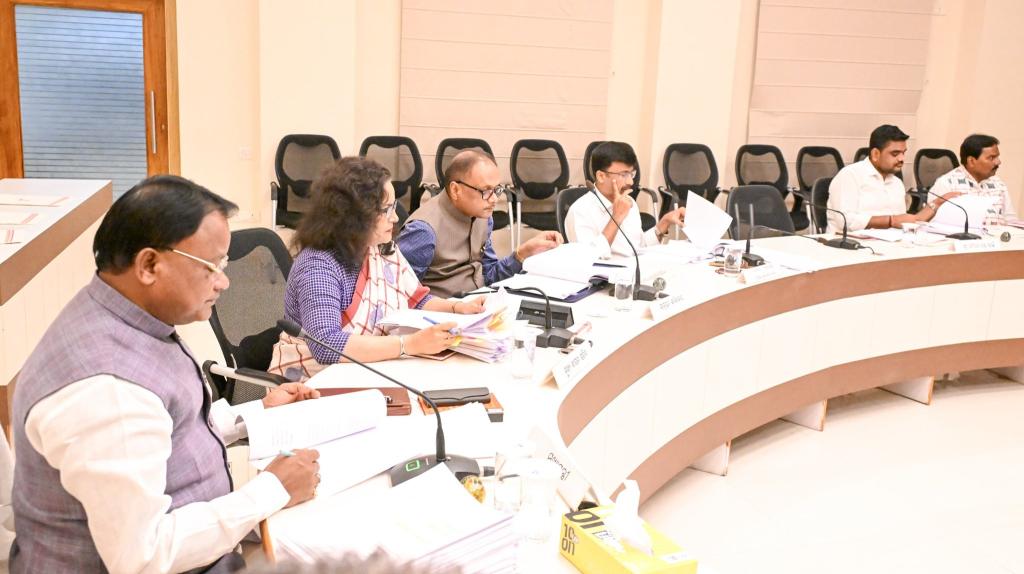
Paperman Media (Cuttack )- The Cooperation Department has placed a proposal before the State Cabinet seeking approval of an incentive package for revival of Badamba Cooperative Sugar Industries Ltd. by Indian Potash Limited (IPL) - a public company with majority shareholding in the hands of Cooperatives like IFFCO, under the provision of special/additional support mechanism in the Industrial Policy Resolution, 2022 (IPR-2022).
The Badamba Sugar Industry has remained defunct since 2011, adversely affecting sugarcane farmers and the rural economy of Badamba and adjoining areas. Due to closure of the industry, sugarcane farmers have shifted to conventional paddy cultivation, and the entire sugar and ancillary industry ecosystem has collapsed. In this backdrop, the Chief Minister of the State requested IPL to consider the revival of the defunct Sugar Industry. Following the request of the State, IPL has proposed to establish a ₹352 crore integrated greenfield sugar complex, comprising a 3500 TCD sulphur-less sugar plant, 16 MW cogeneration plant, and 10 TPD Compressed Bio-Gas (CBG) plant over the vacant land of defunct Badamba Sugar Mill.
Incentives Proposed
The Cooperation Department has sought Cabinet approval for:
• 4% Interest Subvention on Term Loan to the IPL
• Additional 10% Capital Investment Subsidy over and above the conventional 20% (total 30%)
The Cooperation Department with support from the Agriculture Department of the State has proposed to strengthen sugarcane cultivation within the catchment area by implementation of special cane expansion drives.
Possible Impact
The revival of BCSIL is expected to restore sugarcane cultivation in the region, enhance and stabilise farmers’ income, and generate more than 500 direct employment opportunities along with substantial indirect jobs. It will stimulate ancillary economic activities, promote crop diversification from paddy to remunerative cash crops, and strengthen rural livelihoods. The integrated model with cogeneration and CBG production will also support renewable energy generation and advance the circular bio-economy, contributing to balanced regional development and rural industrialisation.
The decision reinforces the State Government’s commitment to farmer welfare, crop diversification and sustainable rural industrial growth.