Education & Gender Equality), NHRC, India visited ICAR-CIWA, Bhubaneswar
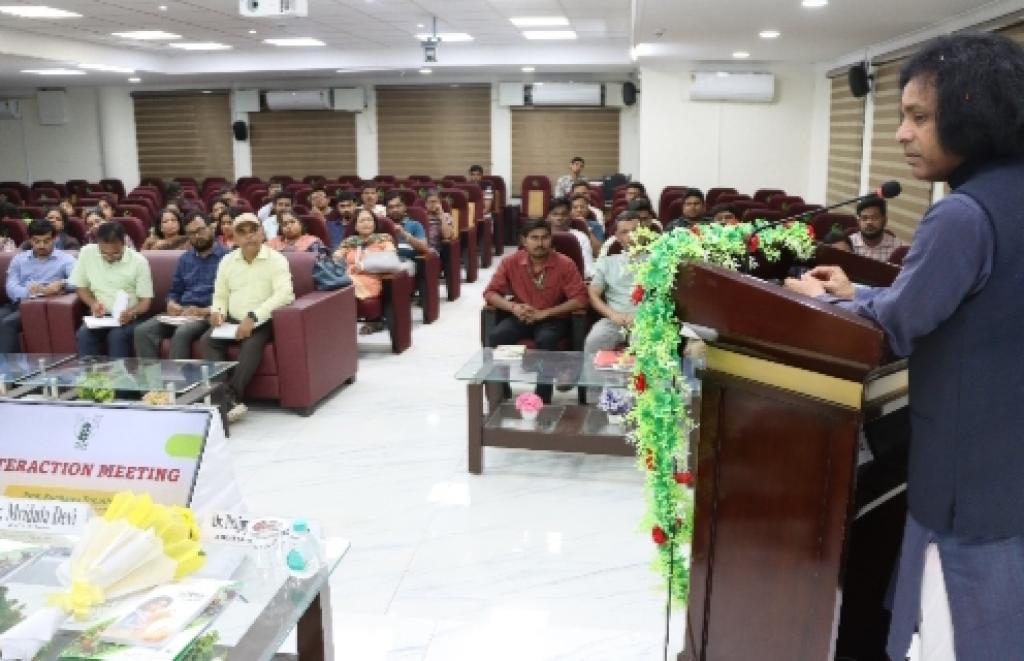
Paperman Media ( Bhubaneswar )- Prof. Kanhaiya Tripathi, Special Monitor for the thematic area of Human Rights Advocacy (Human Rights Education & Gender Equality) at the National Human Rights Commission (NHRC), visited the ICAR-Central Institute for Women in Agriculture (ICAR-CIWA), Bhubaneswar, Odisha on 21st March 2026. The visit aimed to review the Institute’s contributions towards women empowerment and integration of human rights perspectives in agricultural development. Dr. Mridula Devi, Director, ICAR-CIWA, warmly welcomed Prof. Kanhaiya Tripathi and associated Officers and highlighted the institute’s significant initiatives and achievements in advancing gender-responsive research and empowering women in agri-food systems. This was a historic, first-of-its-kind visit by NHRC Special Monitor to the institute, coinciding with the International Year of Women Farmer 2026. The visit of Prof. Kanhaiya Tripathi marks a pivotal shift toward integrating formal human rights frameworks into agricultural research and development for women.
During the visit, Prof. K. Tripathi interacted with the scientists and staff of ICAR-CIWA and appreciated the Institute’s pioneering efforts in strengthening the role of women in agriculture. He commended ICAR-CIWA for its significant milestones in enhancing livelihood opportunities, and mainstreaming gender in agricultural research and extension systems. Encouraging collaborative knowledge generation, Prof. Tripathi also recommended undertaking joint research initiatives and publishing high-impact research papers on women empowerment in agriculture, integrating human rights dimensions. He underscored the need to showcase ICAR-CIWA’s achievements at global platforms to secure wider recognition and replication of its successful models.
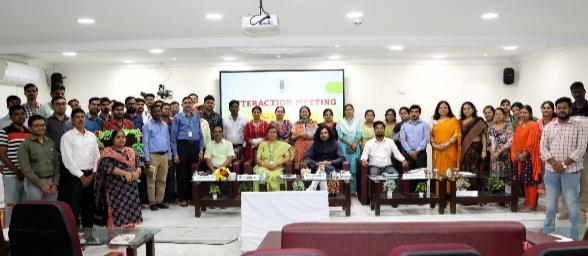
Prof. Tripathi also emphasized the importance of aligning institutional initiatives with global human rights frameworks and suggested strategic collaboration with the United Nations Development Programme, particularly under projects related to agricultural diversification for women empowerment. He emphasized that such partnerships could enhance outreach, impact, and global visibility of ICAR-CIWA’s work. In his address, Prof. Tripathi proposed the establishment of a ‘Human Rights Cell’ at the Institute to systematically integrate human rights perspectives into research, capacity building, and policy advocacy. He highlighted that such a cell could serve as a national model for embedding human rights education within agricultural institutions. He further suggested the development of a comprehensive book on ‘Human Rights of Women in Agriculture’, covering their social, educational, economic and political rights. This publication, he noted, would contribute to both academic discourse and policy advocacy at national and international levels.
During the interactive session, Prof. Tripathi underscored that women in agriculture are not merely labourers but primary stakeholders with fundamental rights. He encouraged the scientific community to undertake joint research initiatives that integrate human rights dimensions into high-impact agricultural publications. Dr Mridula Devi, Director, ICAR-CIWA opined that the efforts of NHRC in promoting gender equality will amplify the progress toward mainstreaming gender equity, thereby advancing gender equality across all spheres of activity. The Director reaffirmed the Institute’s commitment to advancing interventions that uphold dignity, promote equality, and strengthen the empowerment of women farmers across all dimensions of the agri-food system. The visit concluded with a mutual commitment to strengthen human rights-based approaches at ICAR-CIWA.