
New Delhi- Odisha has emerged as a frontline agrarian powerhouse on the national stage. Participating in the National Conference on Kharif in New Delhi, the State Government announced that Odisha's agricultural sector is growing at an impressive estimated rate of 5.3% for the 2025-26 fiscal year, significantly outperforming the national average of 3.1%. This economic momentum builds upon a historic 2024-25 season, where the state harvested over 150 lakh MT of food grains and 156 lakh MT of horticulture produce. Guided by the Central Government's "Purvodaya" vision and its own "Vikashit Odisha @ 2036" framework, the state is aggressively executing farmer-centric policies designed to upgrade rural infrastructure, boost farmer incomes, and build a highly climate-resilient agricultural pathway.
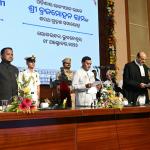
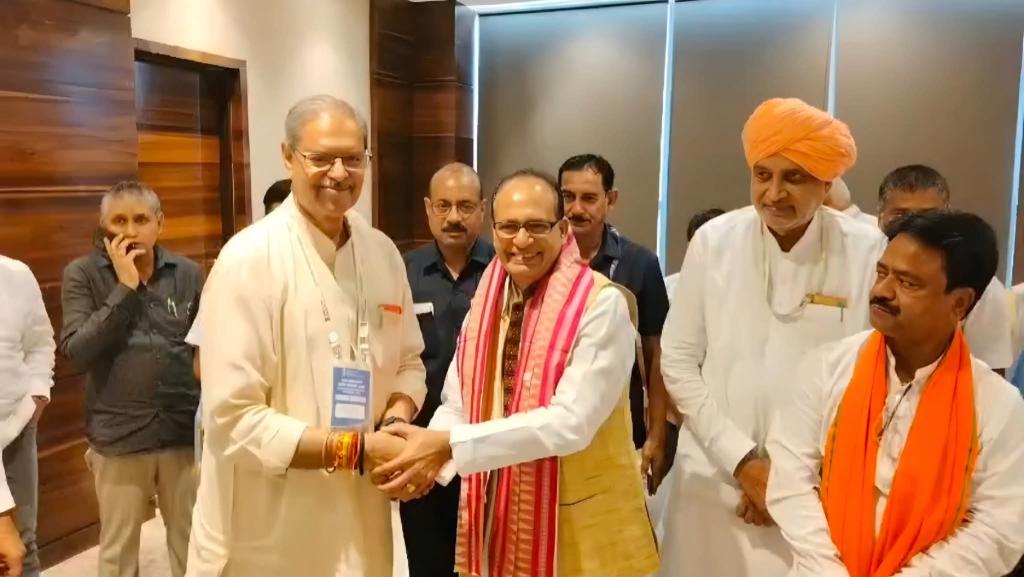
Led by the Hon’ble Deputy Chief Minister of Odisha, Shri Kanak Vardhan Singh Deo, the state delegation aligned with union leaders on critical strategies for the upcoming Kharif 2026 season, targeting a massive coverage of 57.40 lakh hectares. To back this ambitious cultivation drive, Odisha has set up a Rs. 100 crore corpus fund to supply 4 lakh quintals of certified seeds and a Rs. 240 crore corpus fund for the timely prepositioning of 11.43 lakh MT of fertilizers. Locally, the state’s flagship "Samrudha Krushak Yojana" guarantees financial empowerment by securing paddy procurement at Rs. 3,100 per quintal through additional input assistance over the Minimum Support Price (MSP). Simultaneously, the state is rolling out its Digital Agriculture Mission—encompassing a Farmer Registry, Digital Crop Survey, and AgriStack integration—to modernize service delivery.
To sustain this momentum and eliminate operational bottlenecks, Odisha presented a comprehensive memorandum of targeted policy revisions to the Government of India. Under the "Mission for Atmanirvarata in Pulses," the state requested an increase in the pulse demonstration program allocation from Rs. 24.74 crore (covering 24,740 hectares) to Rs. 200 crore (covering 2,00,000 hectares). Odisha also urged the Ministry of Agriculture to fully sanction its Rs. 80.50 crore Digital Crop Survey annual action plan, of which Rs. 42.75 crore has been approved. Crucially, the state proposed a major streamlining of the Price Support Scheme (PSS) payments, requesting that quality checks happen once at procurement centers so that the State Level Supporting Agency (MARKFED) can release immediate payments to farmers, rather than duplicating inspections at warehouses.
Further aligning with cultural heritage and ecological sustainability, Odisha highlighted its upcoming "Balabhadra Jaibika Chasa Mission"—a 5-year natural farming scheme covering 16,600 hectares—and the historic “Amruta Anna” scheme to cultivate aromatic organic rice for the Shree Jagannath Temple's Mahaprasad. The state also highlighted its 10-year plan to plant one lakh acres of organic, high-altitude Koraput Coffee to empower tribal women, capitalizing on recent praise from Prime Minister Narendra Modi. For horticulture and oil palm expansion, Odisha requested specific central interventions, including expanding high-density cotton systems, increasing the borewell subsidy to Rs. 1,00,000, allowing provisions for barbed wire fencing against elephant menace, and enhancing cost norms for rhizomatic spices like ginger and turmeric to Rs. 1.50 lakh per hectare. The high-level conference was attended by Commissioner-cum-Secretary (DAFE) Shri Sachin Ramchandra Jadhav, Director of Agriculture Shri Shubham Saxena, and other senior officials committed to anchoring Odisha's long-term food security.