

Paperman Media | Bhubaneswar
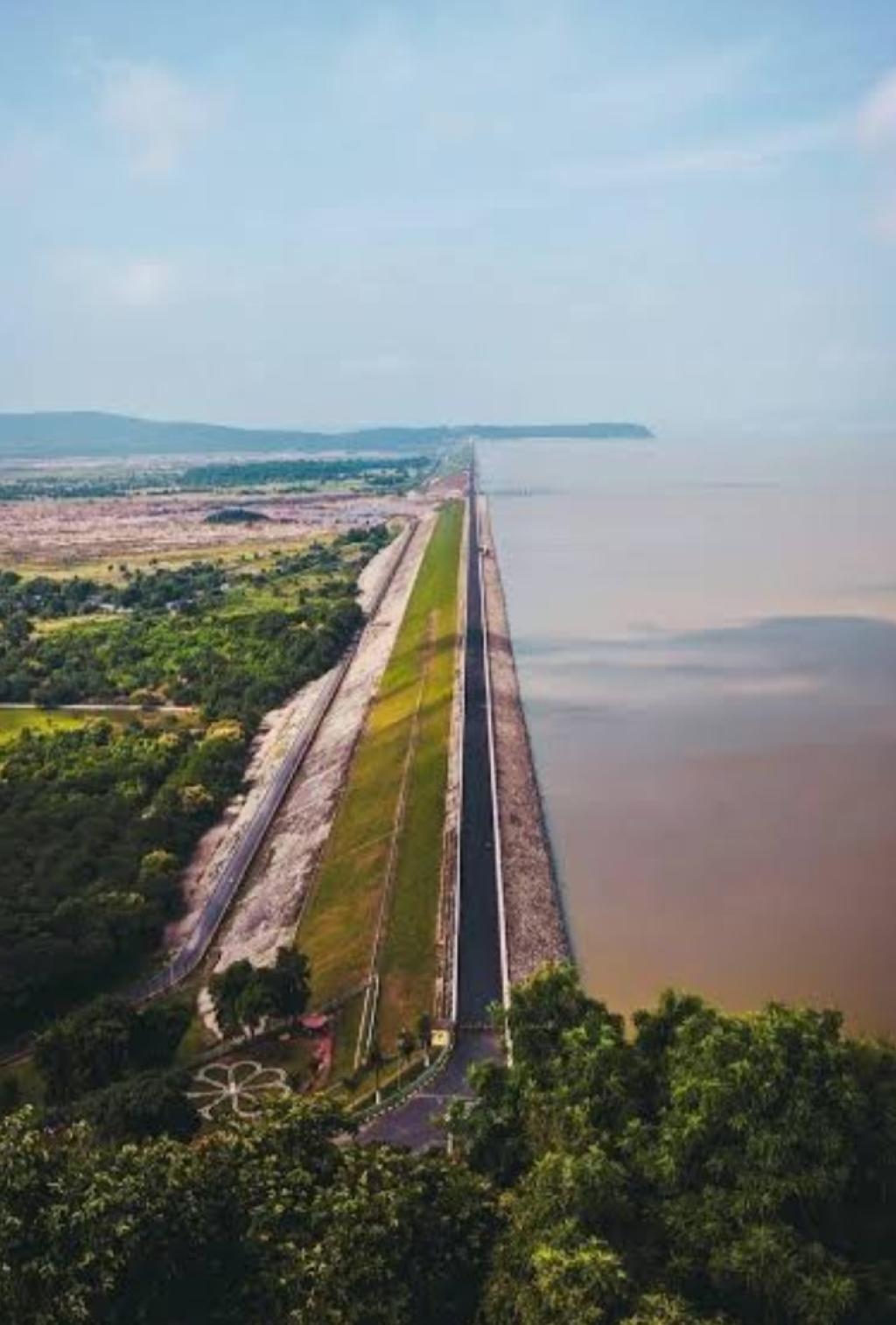
The total water storage capacity of the world-famous Hirakud Reservoir, has declined by 1.82 million acre-feet, according to data provided by Chief Minister Mohan Charan Majhi in a written reply to a question raised by Rengali MLA Sudarshan Haripal.
The Hirakud project had a total storage capacity of 6.60 million acre-feet, including 1.88 million acre-feet of dead storage and 4.72 million acre-feet of live storage, as per the original 1957 project report.
However, an assessment carried out in 2000 showed that the reservoir's dead storage capacity had declined to 0.87 million acre-feet, while live storage stood at 3.91 million acre-feet, bringing the total storage capacity down to 4.78 million acre-feet.
According to the Chief Minister's written response, the reservoir has consequently lost 1.01 million acre-feet of dead storage capacity and 0.81 million acre-feet of live storage capacity, resulting in an overall reduction of 1.82 million acre-feet.
The decline has been attributed to the accumulation of a large quantity of silt in the multipurpose reservoir. The deposition of silt has progressively reduced the reservoir's capacity to store water, raising concerns over its long-term storage potential.
MLA Shri Haripal had also sought information on the government's plans for removing silt from the reservoir. However, the Chief Minister's written reply did not provide any specific information regarding a government plan for desilting Hirakud Reservoir.
Haripal also asked whether the state government had prepared a digital database of people displaced by the Hirakud project. In response, the Chief Minister stated in writing that no digital database of Hirakud displaced persons has been prepared.
The figures have brought renewed attention to the long-term management, siltation and storage sustainability of one of Odisha's most important multipurpose river valley projects.